A window to the past.
Details:
Academy of Fine Arts in Gdansk / 6 weeks / 2018, semester project in Basics of Naval Architecture
Introduction:
The task was to design an object dedicated to the water space of Gdansk to raise awareness of its value in shaping the identity of the city.
Solution:
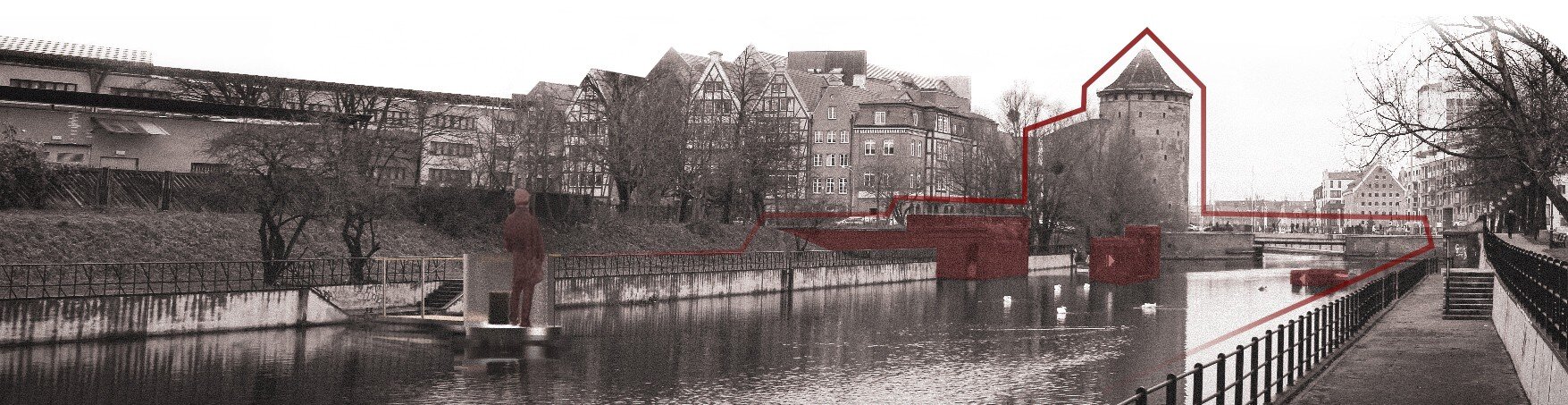
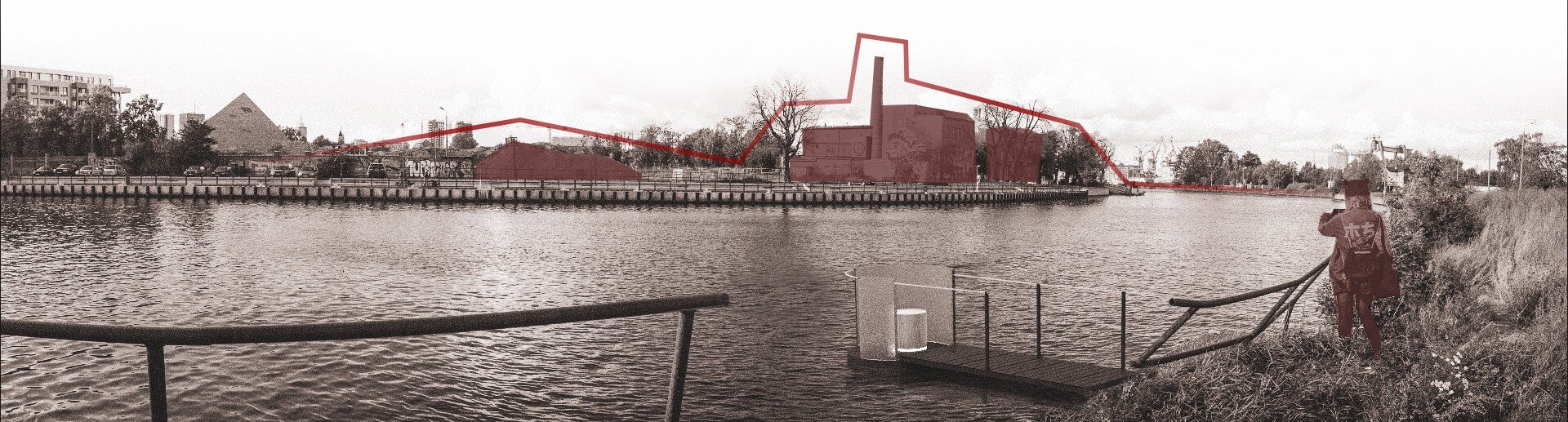
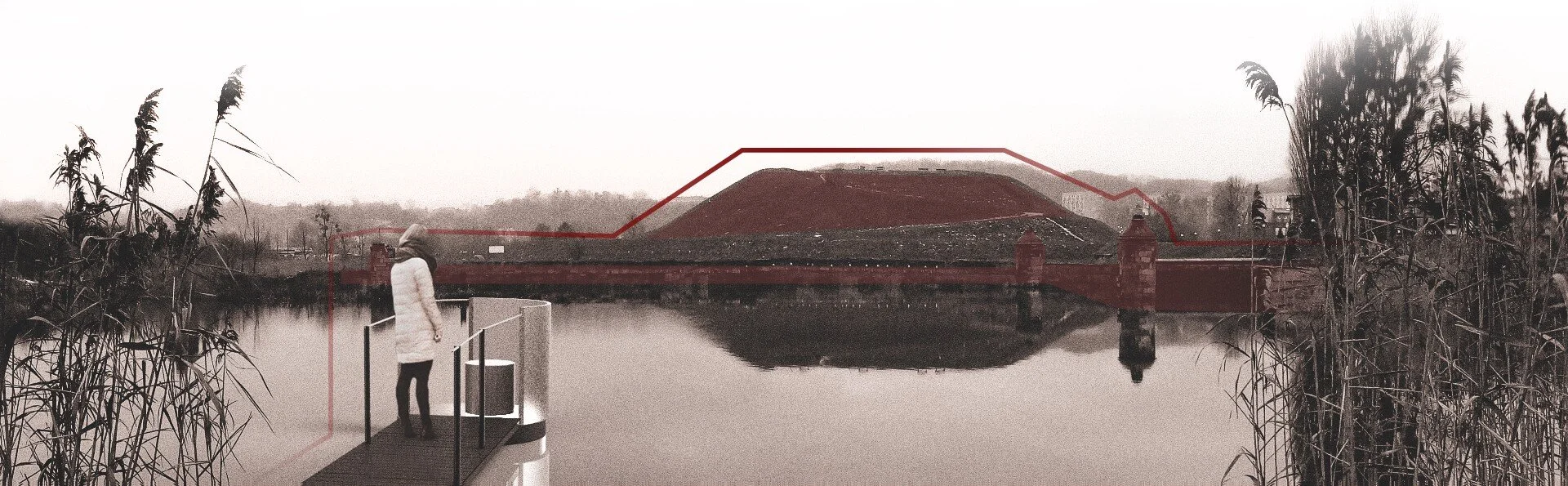
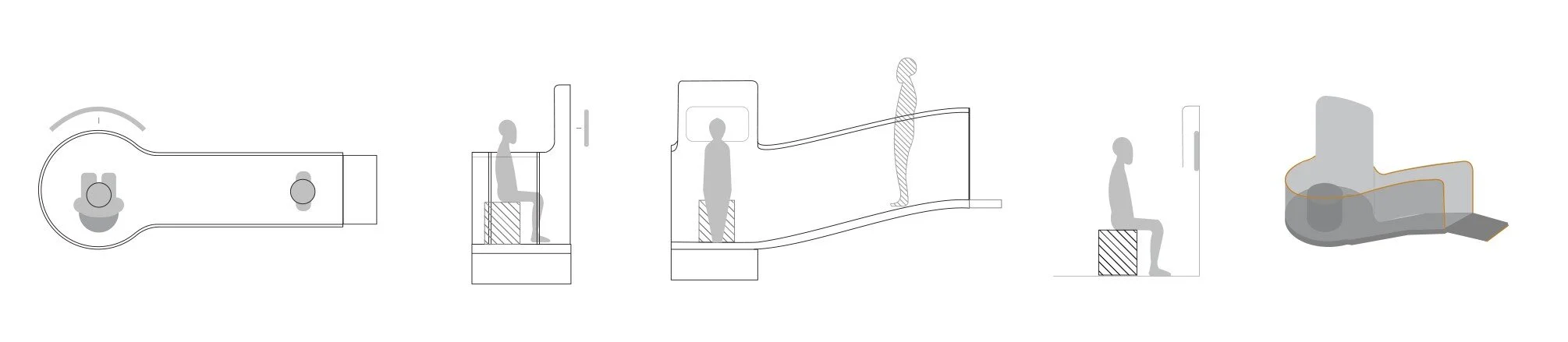
A floating platform placed on water in different locations around the Old Town in Gdansk as a place of contemplation.
This is a fundamental view of the world. It says that when you build a thing you cannot merely build that thing in isolation, but must repair the world around it, and within it, so that the larger world at that one place becomes more coherent, and more whole; and the thing which you make takes its place in the web of nature, as you make it.
— Christopher Alexander
Thought-provoking,
silent manifesto
P R O P O S A L
Monuments should not be a burden to the city, they should attract tourists and accumulate the capital.
Platform placed on water in different locations around the Old Town in Gdansk as a place of contemplation.
Such a platform could exist alone in a specific location or it can be a group of objects used as a part of a city game or as temporary event (ex. historic festival).
The ruin is a gift to teach us about loss as well, as to warn us about the past - such testimony of the city is an integral part of the city’s culture.
Exploration:
How existence of such object may influence the city’s aesthetics and context
Different ways of displaying information about the monuments
How citizens perceive the condition of the city through a lens of its history
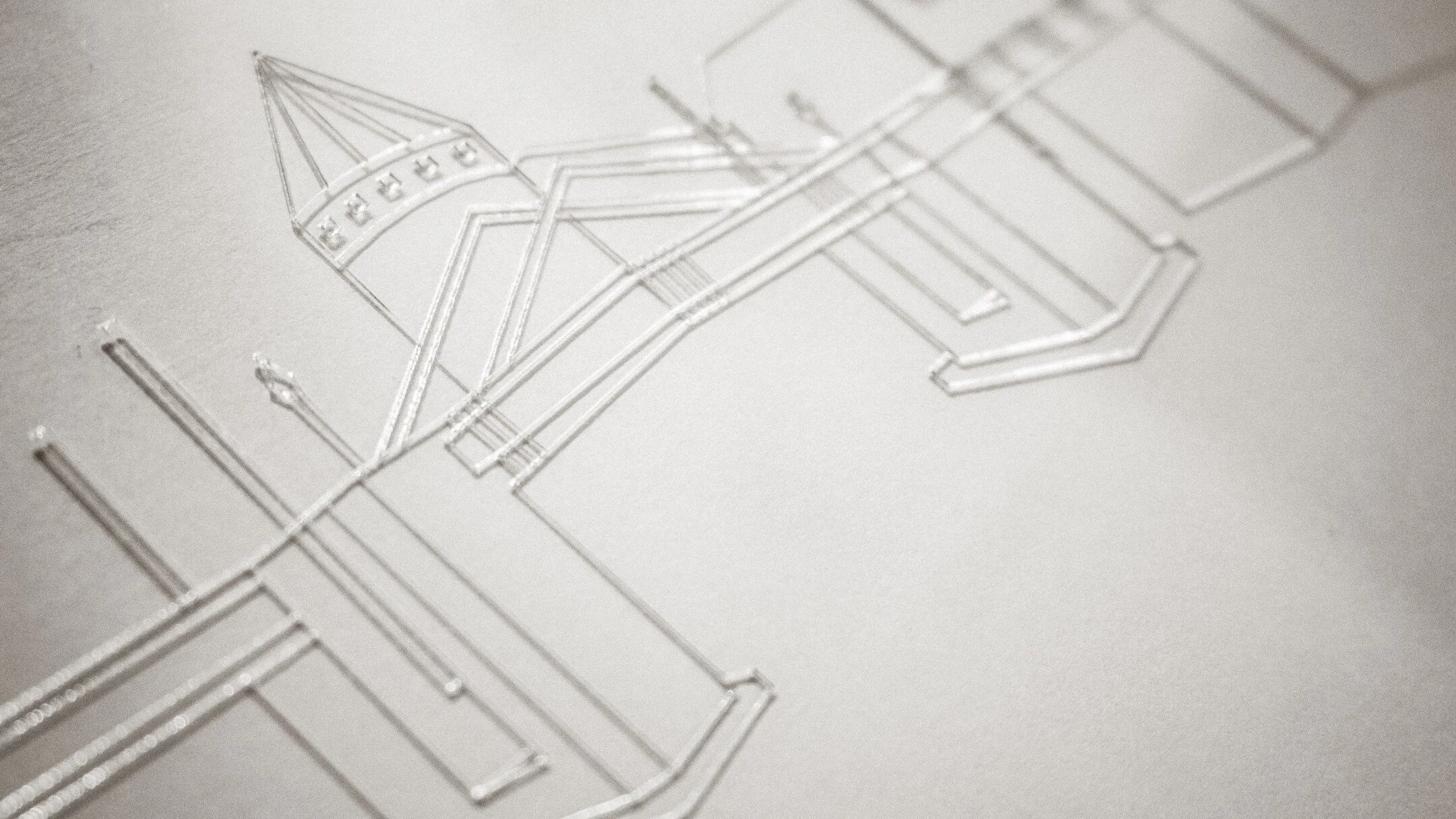
How to tell an immersive story about a past?
E X P L O R A T I O N
Background:
History of Matniki Bridge
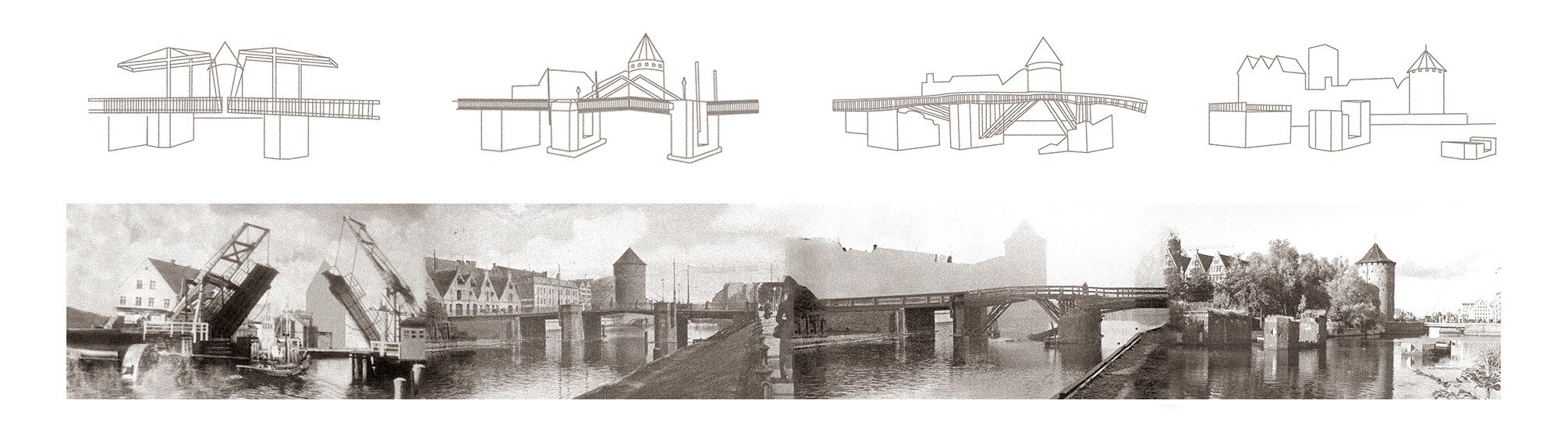
The history of the Matniki Bridge dates back to the middle of the 16th century — it was built in 1576 and was then a wooden bridge. In 1892, it was replaced by a metal structure and began to function as a drawbridge with a central double-span, road-tram. After World War II, it ceased to exist and has not been rebuilt until now. In 2006 repair and maintenance of the bridge remains.
Changes over time:
When I look at the Matniki Bridge on Kamienna Grobla Street — I see the chaos its endured, the way it was constrained to constant change, then how it has been adapted and finally left behind to oblivion.
Design question:
How might we create an immersive experience around understanding the context of the ruins (their history, impact, meaning) and not overloading the visitors with information?
Exploration of different ways of displaying information about the monuments:
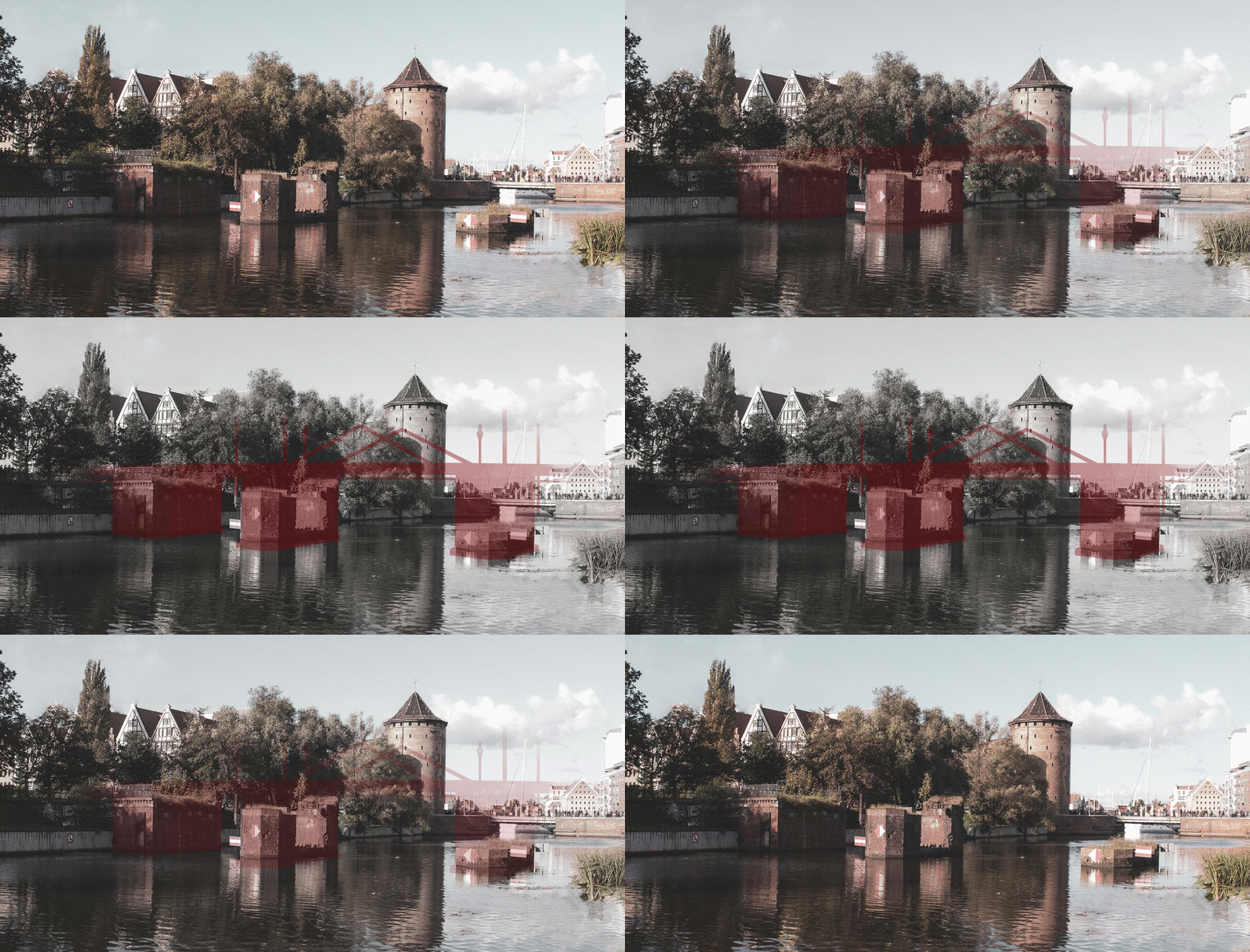
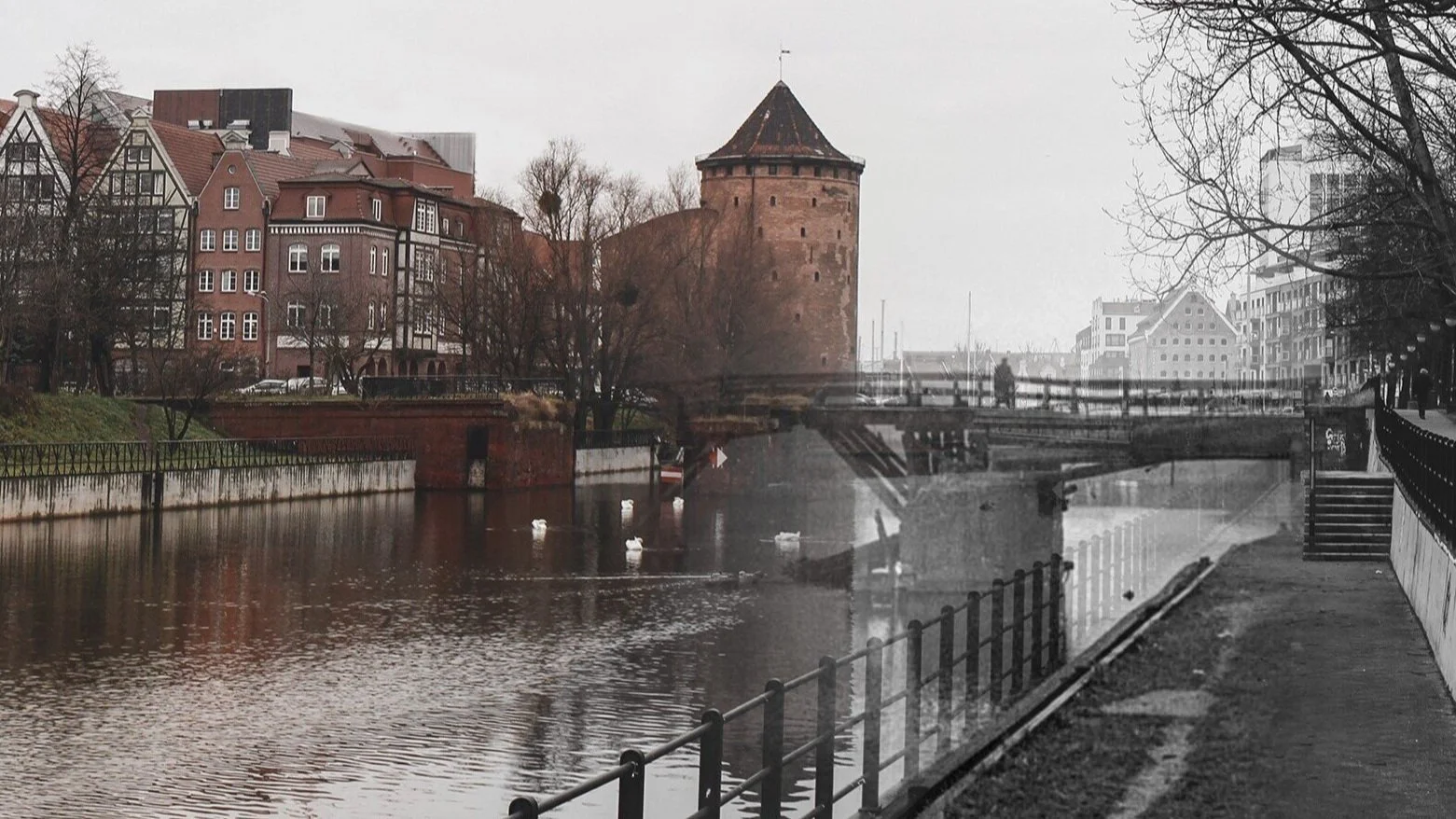
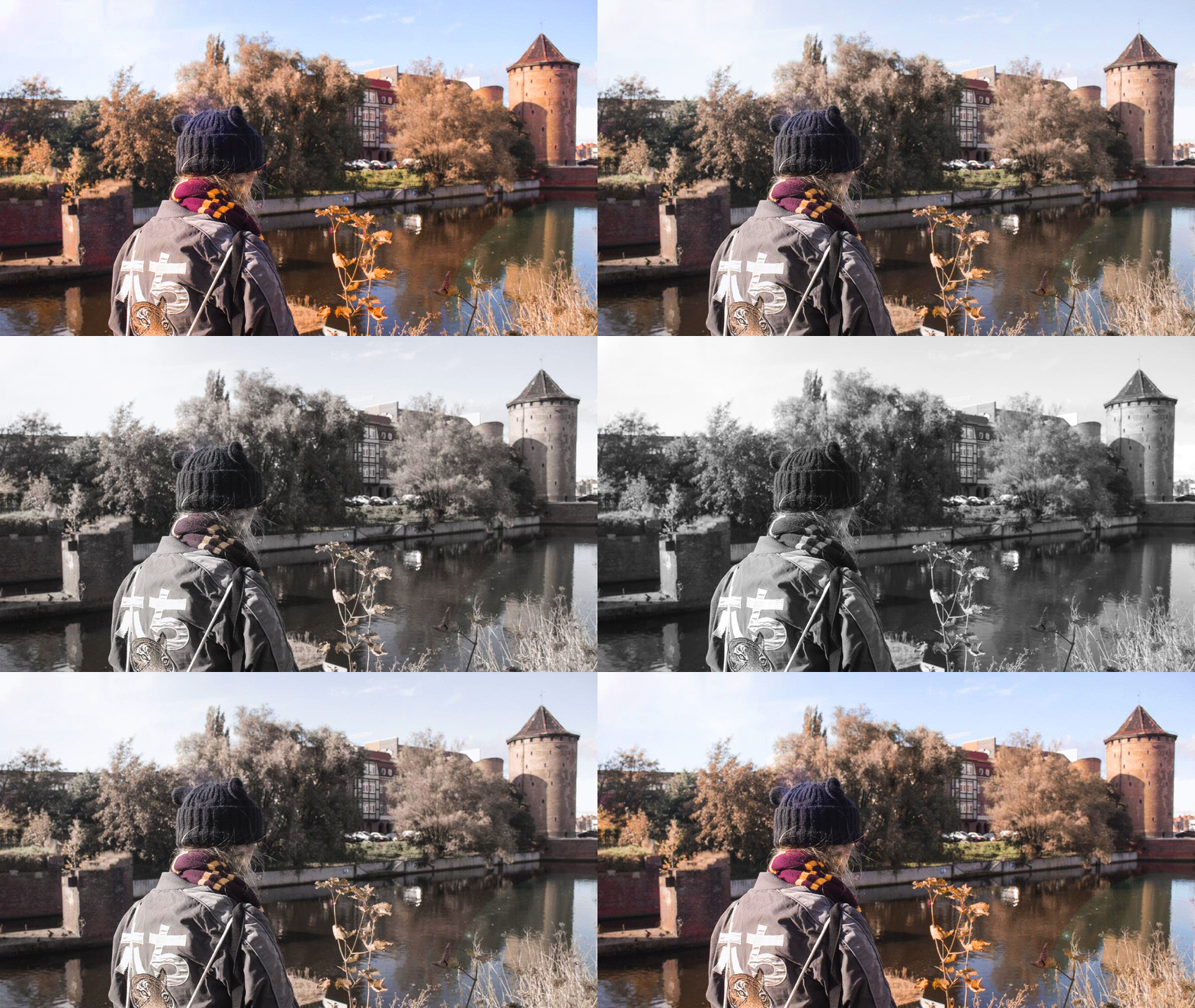
Superimposition Augmented Reality
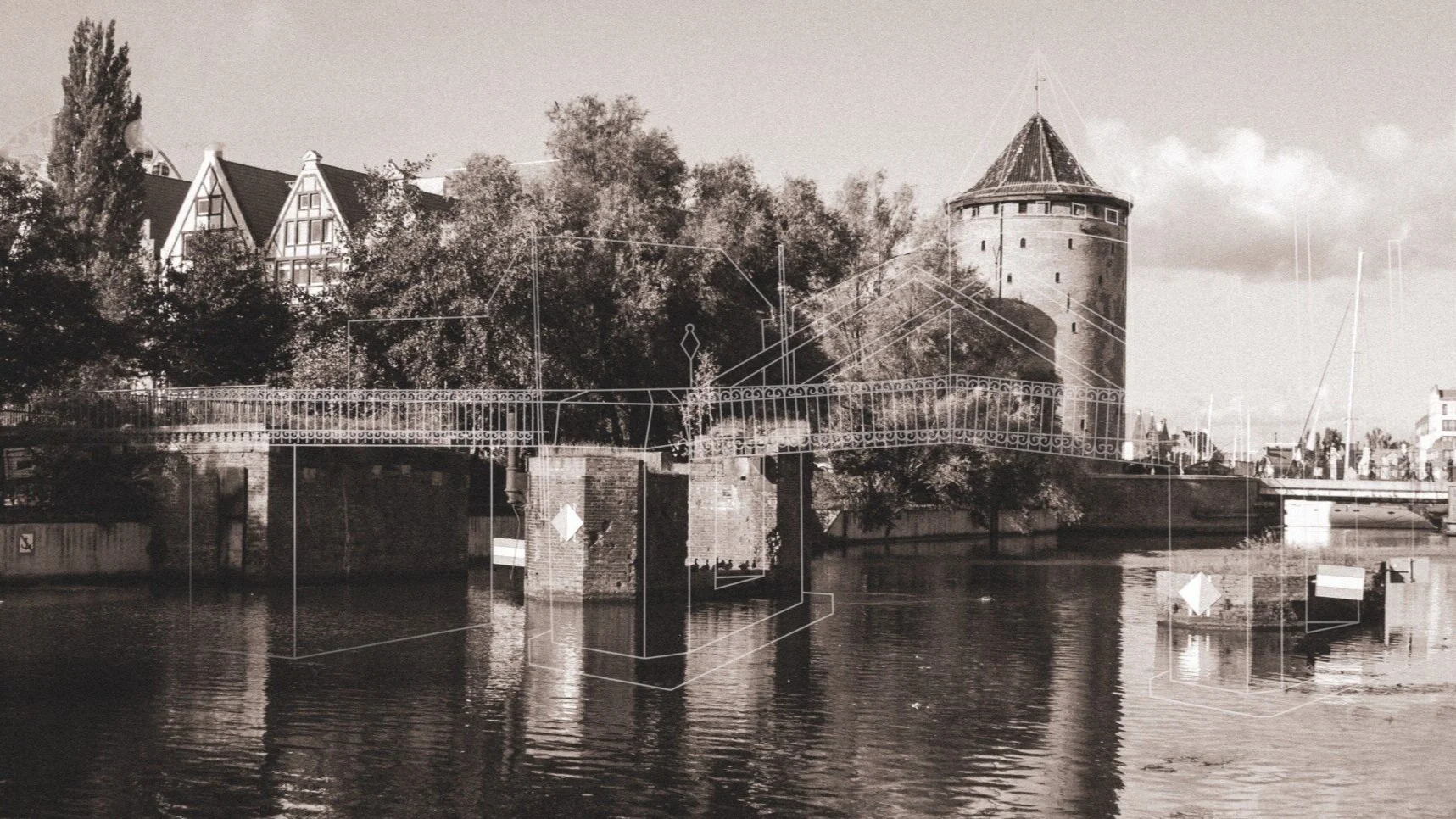
Physical engraved overlay on the real environment
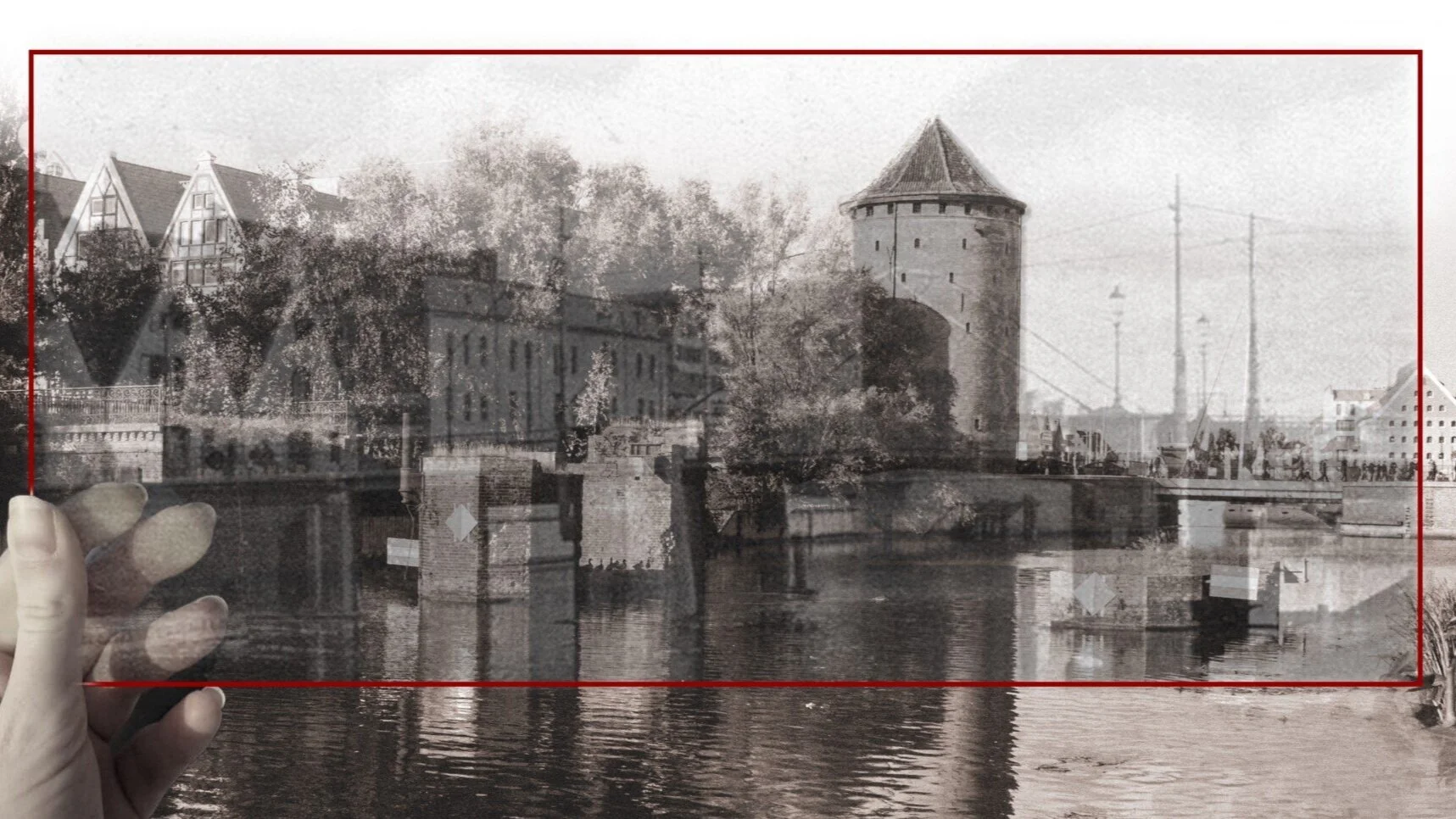
Markerless Augmented Reality
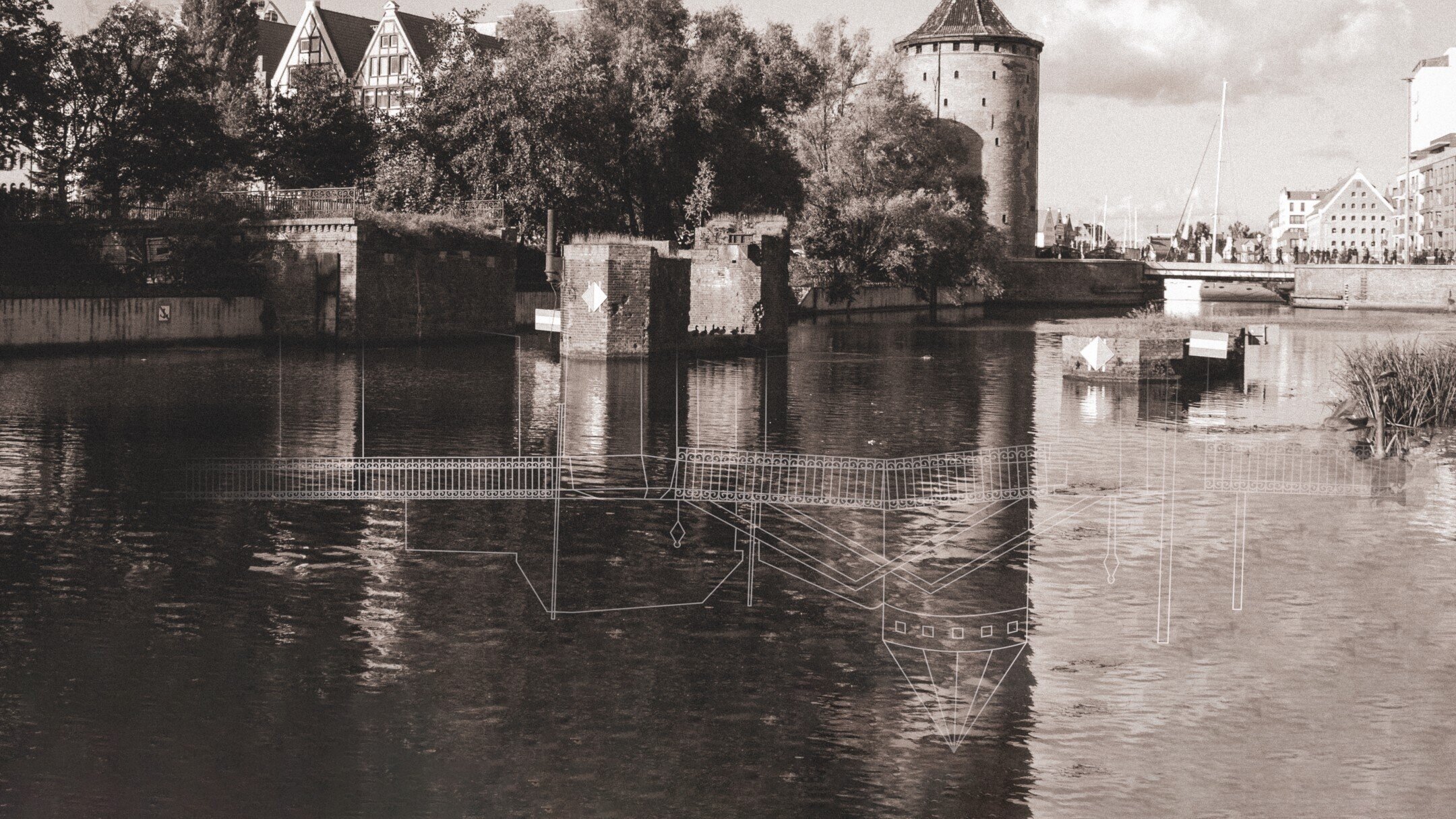
Upside down overlay on the real environment to make an emphasis on connection to water culture
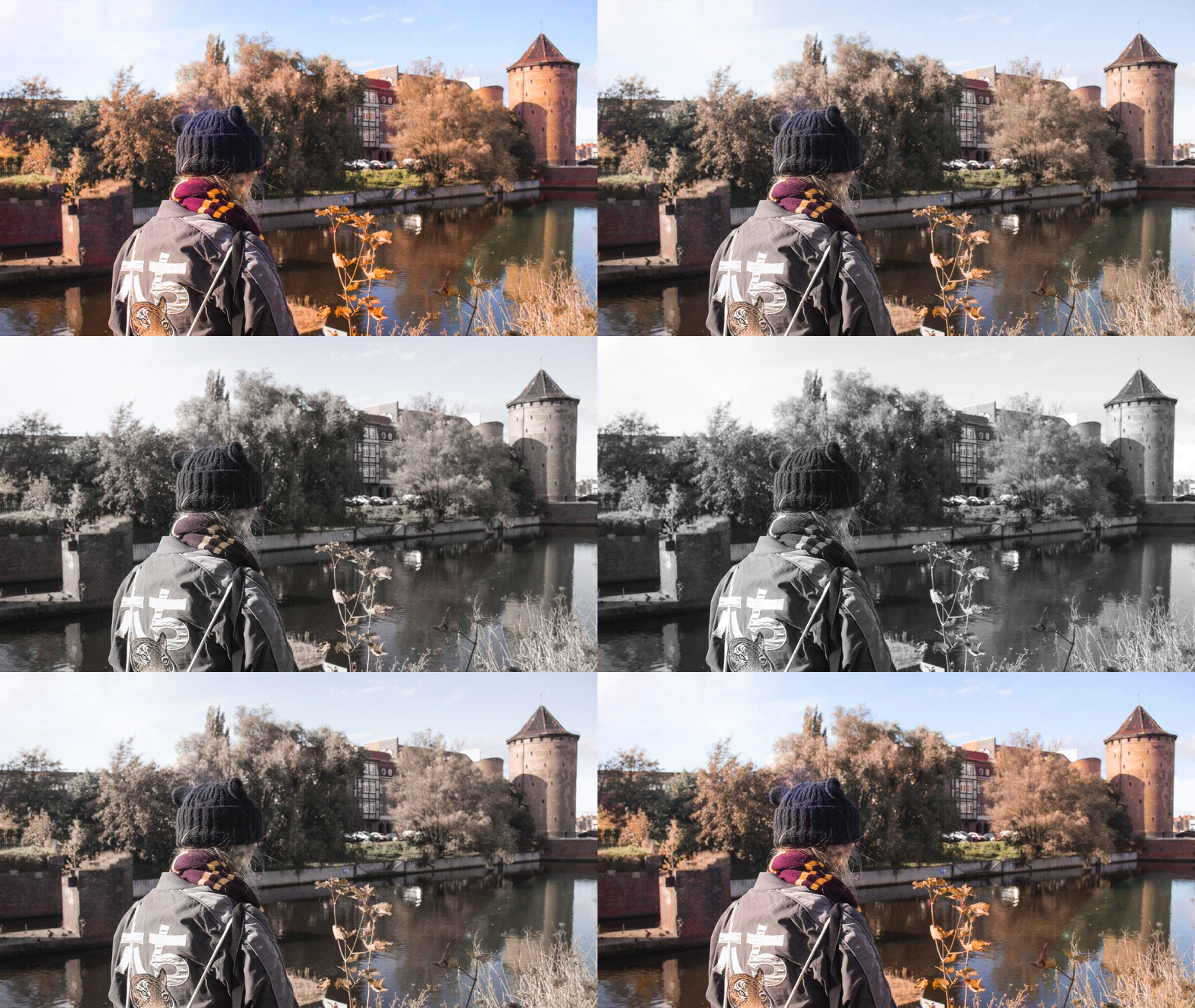
Re-discovering Gdansk
R E S E A R C H
Exploring the city from a different perspective:
We spent many days wandering around Gdansk’s Old Town, the bastions, the old fortifications, industrial shipyards, rediscovering own city as locals and acting like tourists.
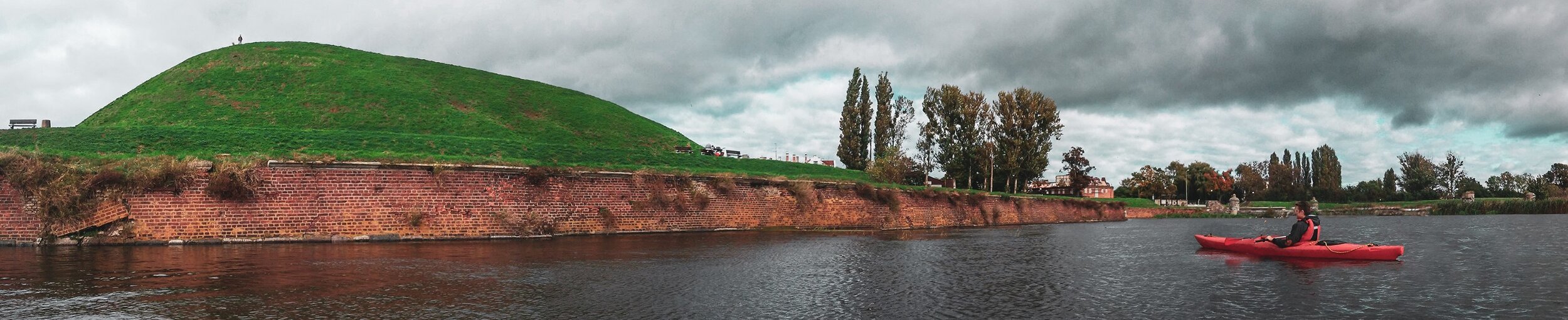
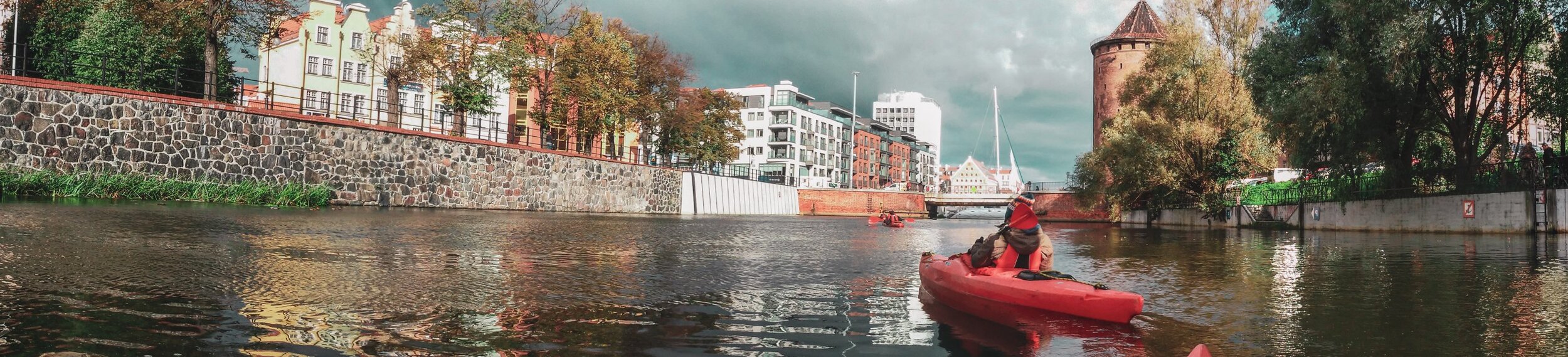
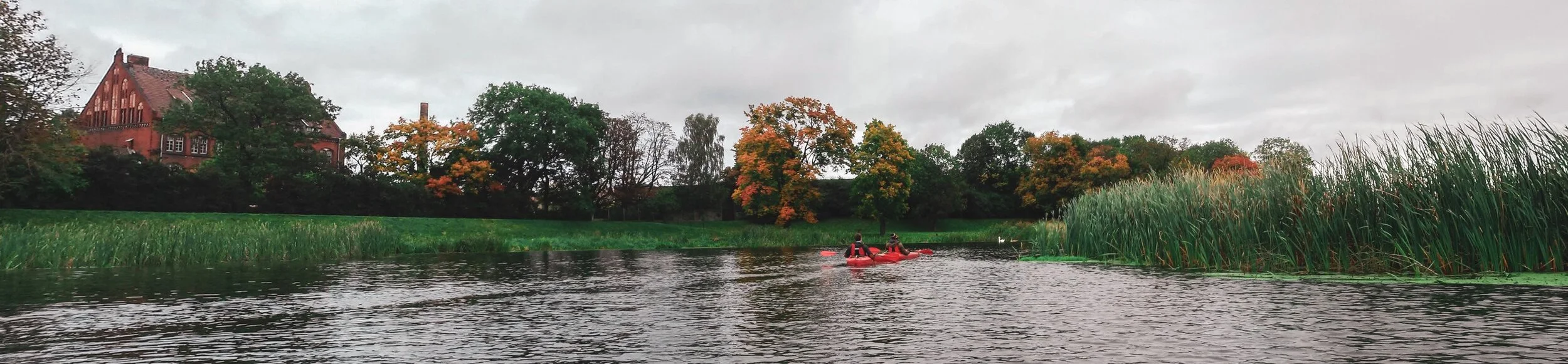
Then we discovered that there is nothing better to absorb the vibrant, living metropolis from the perspective of a kayak. The closeness, the pleasant coolness and the noise of water, the low altitude of vision, all these specific features lead to one conclusion — the involvement of all the senses in experiencing the city would leave a significant impression on any visitor.
Same experiences, different outcome:
Patrycja transformed the existing bridge in Gdansk Oliwa into a platform enabling the user to listen to the sounds of different environments
Pola made a concept of canoe stop for a canoeist to promote this particular outdoor activity in the area
Malgorzata took up a challenge to explain the phenomenon of backwater by an interactive object